Cancer Analysis
Cancer is a condition when a few of the body's cells grow out of control and spread to other bodily regions. In the millions of cells that make up the human body, cancer can develop practically anywhere. Human cells often divide to create new cells as the body requires them. New cells replace old ones when they die as a result of ageing or damage.
Occasionally, this systematic process fails, causing damaged or abnormal cells to reproduce when they shouldn't. Tumors, which are tissue masses, can develop from these cells.
In this analysis, a thorough investigation of a cancer data collection is conducted. A model has been developed to predict cancer in order to more accurately determine if a person has the disease or not.
Major Libraries
Flow of Analysis
After collecting the data, it was reviewed for any missing values. The analysis was divided into three sections: Anxiety, Overall breakdown, and Breakdown based on Drinking and Smoking - because drinking, smoking, and anxiety have powerful interconnections. The KNN algorithm was used to develop a predictive model. KNN was chosen because the dataset was relatively small and KNN performs best with few tuples, allowing prediction with a high degree of accuracy.
Model Performance
Breakdown of Cancer
The chart shows that there is not much of a difference between men and women who have cancer; both groups are close together.
Causes of this behaviour:
- •Unhealthy eating patterns, processed foods, additives in food
- •Chemical pollution and constipation
- •Usage of synthetic hormones and pesticides in farming and animal husbandry
- •Poor and stressful lifestyle, extended working hours
- •Air we breathe, smoking and drinking
- •Longer life expectancy - bodies make more mistakes as we age and are exposed to more diseases
Anxiety Analysis
The graph shows that the age group 60–70 comprises the greatest number of persons, followed by those in 50–60 and then 70–80. According to the dataset, anxiety is directly correlated with the population size of a given age group, with persons in the 60–70 age range experiencing the most anxiety.
Alcohol and Smoking and their relationship to Cancer
Two key conclusions from the graph:
- →People who drink have higher cancer risk than those who smoke.
- →It can be argued that practically everyone who smokes and drinks has cancer.
KNN Model
Model Code
X = data.iloc[:,2:15]          # independent features
y = data.iloc[:,15]            # dependent features
X_train, X_test, y_train, y_test = train_test_split(
    X, y, test_size=0.2, random_state=12
)

# Feature Scaling
X_train = preprocessing.StandardScaler().fit(X_train).transform(X_train)
X_test  = preprocessing.StandardScaler().fit(X_test).transform(X_test)

# Model Creation
classifier = KNeighborsClassifier(
    n_neighbors=8,
    weights='uniform',
    metric='euclidean'
).fit(X_train, y_train)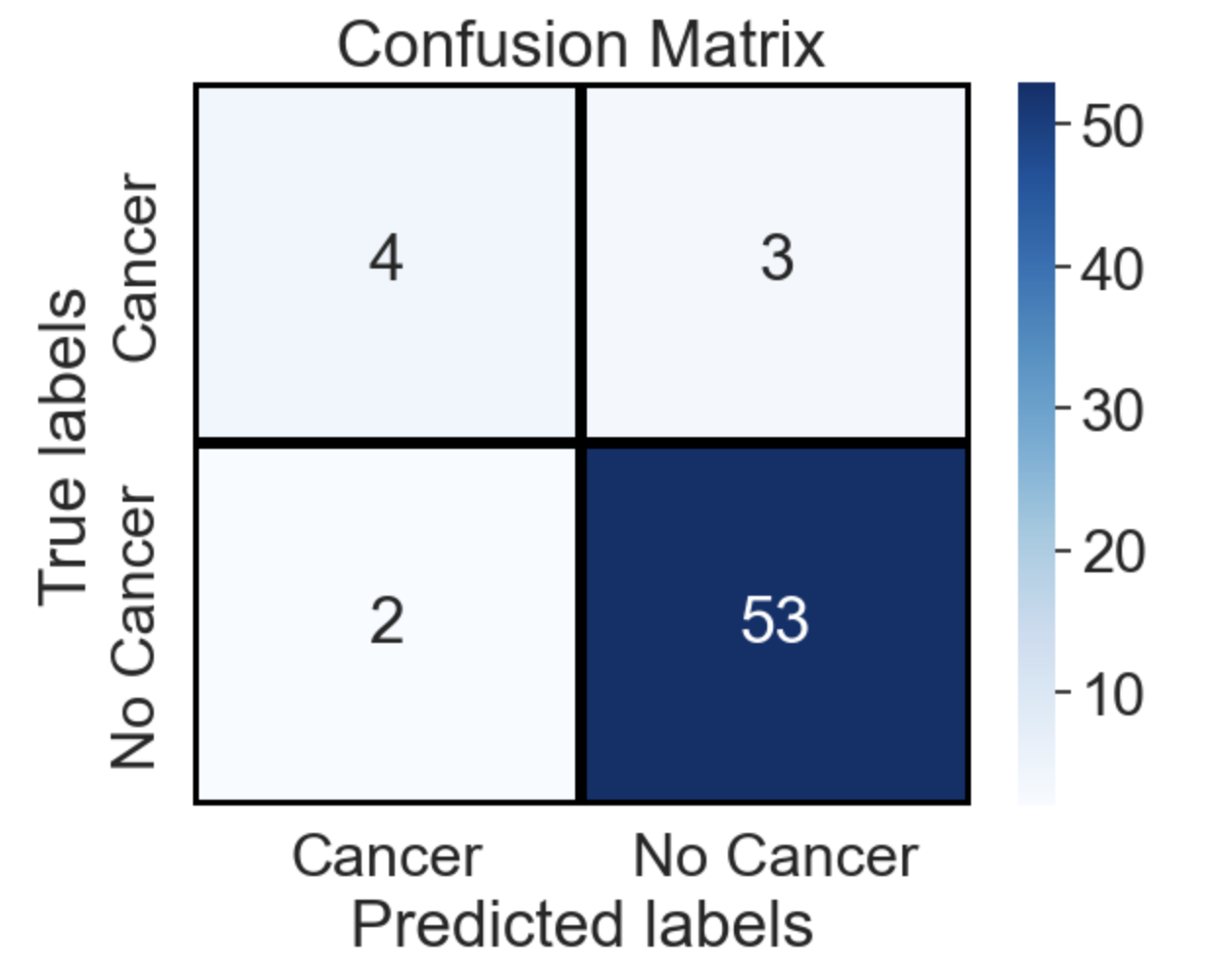
Author's Note
"There are numerous strategies to either avoid cancer or lessen the harm it causes. The greatest method is to maintain good health by putting an emphasis on healthy behaviours and engage in regular exercise. A healthy body serves as a barrier to prevent illness. The more we practise these activities, the less likely we are to get diseases, enabling us to live longer without stress. Being optimistic also plays a crucial part in our health."